.jpeg)
According to current human scientific knowledge, The Universe came into existence for unknown reasons 13.8 billion years ago in a dramatic explosion of energy and matter. Starting with a primordial soup of light and subatomic particles at temperatures beyond comprehension, things gradually started to take shape as conditions cooled down, particles collided, and the simplest element called Hydrogen, a marriage of 1 proton, 1 neutron, and 1 electron, filled The Universe. Eventually, non-uniformly distributed clumps of Hydrogen gas led to pockets of increased gravitational pull. These pockets began to attract even more gas, starting a Snowball Effect that led to extremely dense, hot concentrations of matter; and just like that, the first stars were formed. These stars, some smaller and some larger, forged new exciting elements in their hot, dense cores. After a fruitful life, some of these stars then collapsed into violent explosions called super-novae, sending even newer, more exciting elements careening outwards through space, turning The Universe into a fertile celestial soil. Out of this soil sprouted a lush garden of interstellar bodies; planets, solar systems, and galaxies, all composed of the same stardust, and all arising from the same universal forces from the quantum to the cosmic scale.[1],[2],[3]
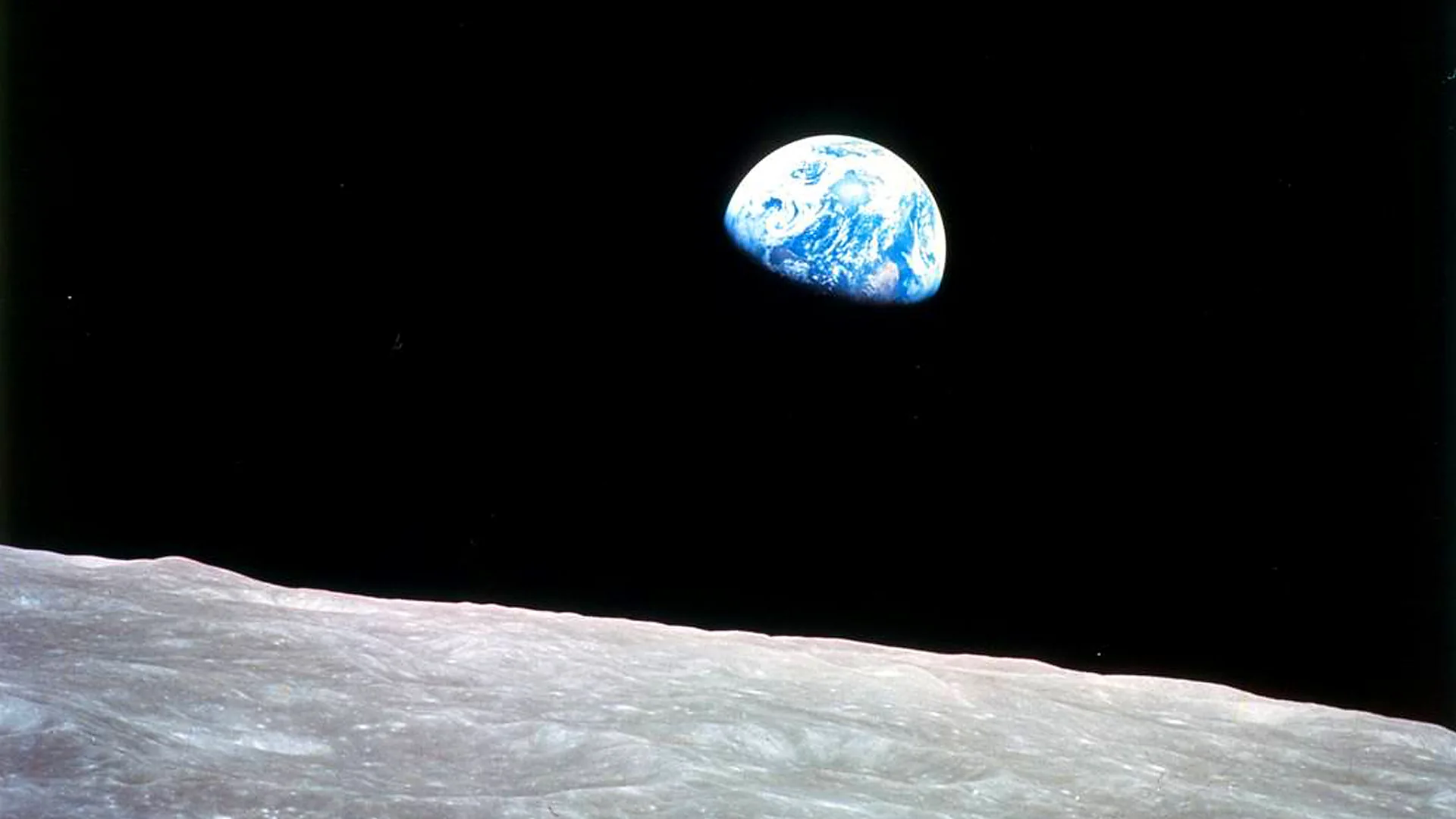
About 9 billion years into this wonderful story, one particular planet was born in what scientists call the Goldilocks Zone, at a favorable distance from its young star in a distant region of The Milky Way Galaxy.[4] Frozen water was delivered to this planet’s surface by rainfalls of meteors, and that water combined with carbon, nitrogen, and other organic compounds to form an eccentric expression of energy and matter called Life.[5] A confluence of perfect factors allowed Life to persist on this planet, taking the next ~3.8 billion years to multiply, evolve, and flourish against all odds to encompass every corner of the globe, from the bottom of vast oceans to top of mountain ranges, and every nook, cranny, and niche in between.[6]With incredible tenacity to propagate and flower into an endless spectrum of beautiful forms, Life transformed the planet into a cosmic oasis, with control mechanisms and contingency plans to maintain a habitable world.[7] This exceptional planet is called Earth, its star is called The Sun, and my name is Joshua Bennett Jacobs, one of the lucky intelligent life forms of Earth and member of the species Homo Sapiens, living in the 21st century AD, about 4.5 billion years after the Earth’s formation.
As a living organism with a cognition so advanced that I can contemplate the meaning of my life or attempt to understand the nature of my reality, my mere existence is dumbfoundingly unlikely. The number of things that had to happen for me to be alive, so that I can look up to the sky and bear witness to photons, emitted by The Sun and refracted off of the biologically optimized mixture of gases in The Atmosphere, as they chemically react with my retinas and allow me to perceive an intoxicating concerto of arcipluvian splendor which I call a sunset; it is almost too good to be true. Not only can I enjoy a sunset, but I can eat delicious food, watch a deeply stirring movie, and dance to amazing music created by other humans who I’ll feel connected to but never know. I can laugh and cry and experience this profound emotion called love, and I can travel and explore the delightful diversity of human cultures and natural environments that exist in the world, from dizzyingly expansive mountainscapes to surging waterfalls – and I am free and wealthy and privileged enough to pursue and access all of those things uninhibited by any external forces. I don’t know how or why The Universe formed, or how life on Earth came to be, or why I was born into such a lucky position capable of taking advantage of my incredible place in this Universe. The personal endeavor to find these answers is important and eye-opening, but it is an ultimately futile attempt to fully understand something much larger, older, and more complex than myself. All I can be sure of is that there is far more than what meets the eye; and I believe that, underlying my existence on this small blue gem, there is a force which ties together everything within its domain, connecting the microbes in The Soil to the water rushing towards The Ocean, to the birds soaring in The Sky, to me and you and every other life form on Earth, and potentially beyond. This is the source of all living matter, a force which I have come to know as Gaia.
In recent years, I have begun cultivating a personal and empowering relationship with Gaia. I started by spending lots of time in nature, meditating, and letting my mind wander. I started being more mindful as I went about my days, noting whenever something bothered me, caught my attention, or triggered my thoughts. As much as possible, I captured and nurtured these ideas, doing lots of research on everything and anything that came to my mind, and I started writing down and documenting as much of this journey as possible through journal entries, voice memos, and video clips on a personal camcorder. As I continued down this journey, I started to gain a clearer vision for what a better world can look like, and what my role can be in shaping it. At some point, this vision coalesced into a singular ‘master document’ which I have used to organize and strategize my life’s work. This document, and the lifelong mission which it embodies, has come to be known to me as Project 2050.
I do so because it seems like the only way to adequately repay my debt that I owe to Gaia, to recompense Her for the unlikely gift of existence that I’ve been given. Somehow, the Universe and all of its wonders formed, and I am alive and privileged enough to enjoy all of this beauty. Therefore, I must dedicate my life to appreciating and protecting that beauty – all of that life and natural splendor that I share this gift of existence with – and I will do so by leading a global movement to reshape broken systems, heal the broken human spirit, and restore balance to the natural world.
This document sets up lifelong pursuits which I will take in order to fulfill the purpose I stated above. Of course, my driving motivation for living is not just to enact these changes for the betterment of the world – as any other person, I also have a strong desire to enjoy the deepest forms of love, to achieve the highest levels of excellence, and to chase and explore all the wonders that this world has to offer. I believe that these things will go hand in hand with my pursuits to change the world for the better, and I am determined that, by the year 2050, I am well on my way to fulfilling these endeavors. What follows is my plan for how I will get there. Welcome to Project 2050.
This public notebook is meant to help me on this journey; by systematically organizing, documenting, and sharing my thoughts, projects, and experiences with the world. I hope that my work can provide a source of inspiration and connection for others to embark on their own journey and tap into this global movement.
In creating this public notebook, I have taken inspiration from Deepak Varuvel Dennison, who has a wonderful website and digital garden of his own. Check him out [here](https://notebook.ddeepak95.com ).